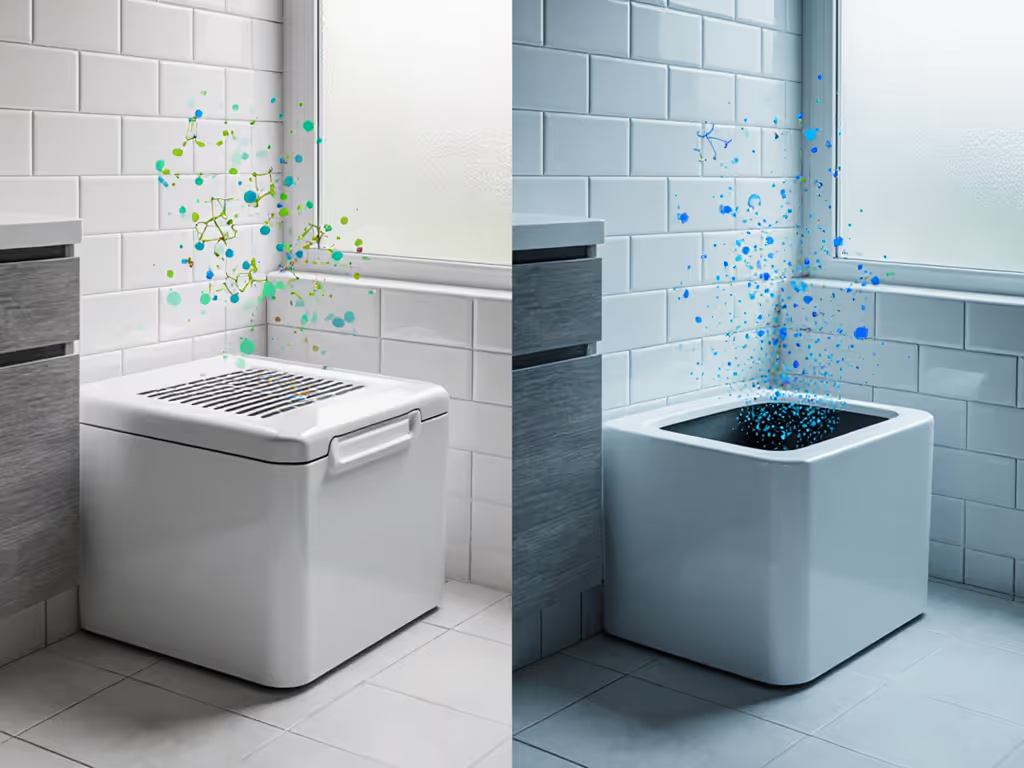
Stainless Steel vs Plastic for Large Breed Litter Boxes
By Omar Haddad • 2nd Jun
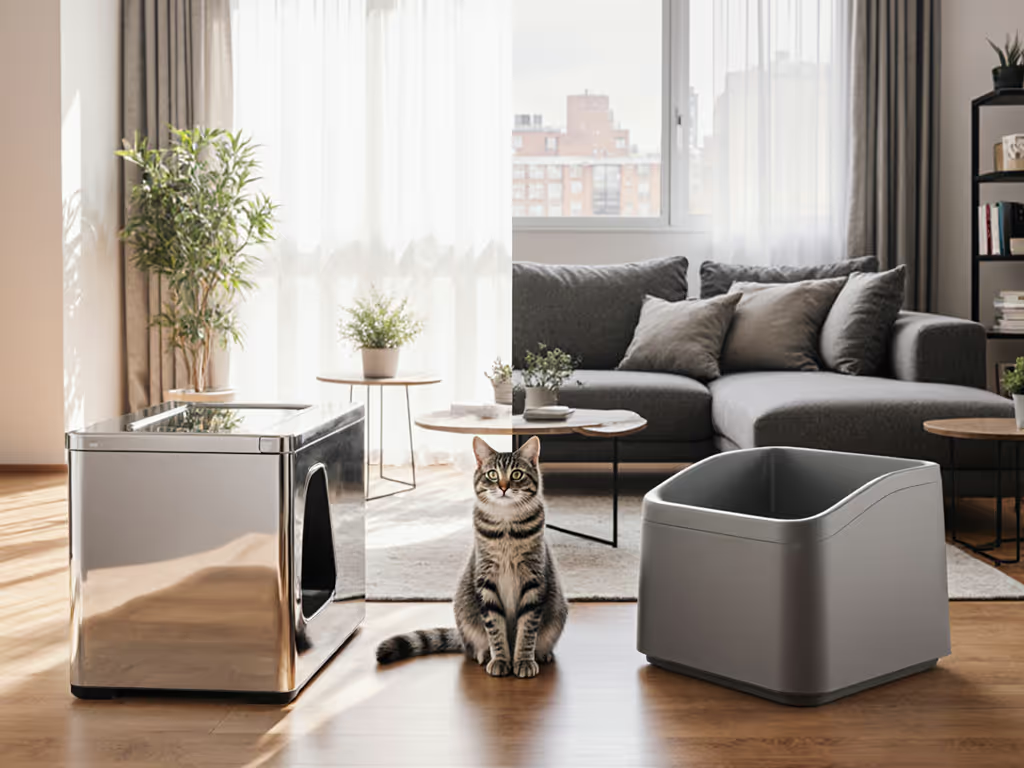
Stainless steel vs plastic for cats is no longer a niche question when you share 700 square feet with a Maine Coon who pees like a small dog. If you're doing a large breed litter box material comparison, the pan isn't decor, it's infrastructure that controls odor, effort, and long-term cost.
This piece walks through stainless vs plastic across 10 dimensions that actually matter in an apartment: odor, durability, noise, cleaning effort, and total cost of ownership. The goal isn't to crown a universal winner, but to give you enough material science plus grams-per-day math to pick what works for your cats and space.
Eco works only when the cat says yes.
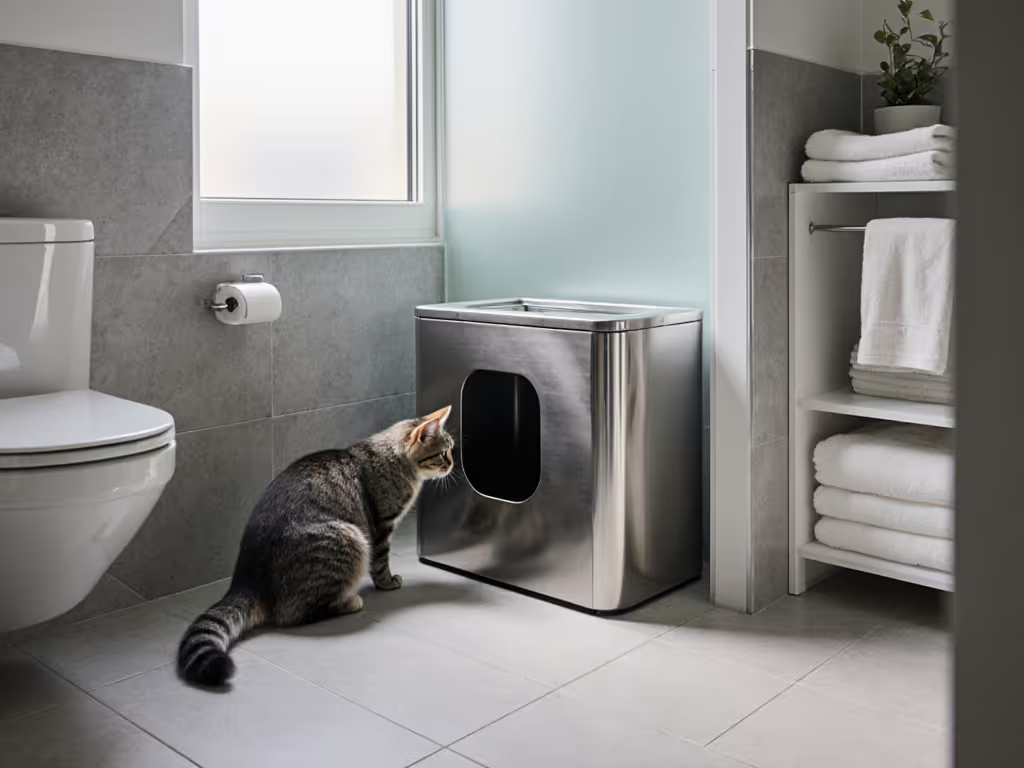
1. Structural Size & Rigidity: Can It Actually Fit a Large Cat?
For big cats (Maine Coons, Ragdolls, long-bodied DSH mixes), structure comes before material. But the material changes how structure behaves.
Plastic
- Most big-box "jumbo" boxes are plastic, which makes them relatively light and easy to move.
- The problem: thin plastic flexes. Under a 7-9 kg Maine Coon pivoting to cover, sidewalls can bow outward.
- That flex reduces effective interior footprint and can stress seams where hooded tops or side extensions snap on.
Stainless steel
- At the same wall thickness, stainless is significantly stiffer than plastic.
- Result: tall, straight walls that don't bow when a large cat leans, keeping the full interior size usable.
- Good stainless pans often have squared corners and near-vertical sides, which increases usable floor area for long cats.
Maine Coon litter box durability starts with walls that don't deform. For model recommendations sized for big breeds, see our best large-cat litter boxes guide. Stainless wins here if the pan is properly rolled at the edges and made from a decent gauge (not flimsy sheet metal). Very thin stainless can oil-can (pop and flex) in irritating ways.
Material notes:
- If your cat's tail or back touches the hood ceiling while they posture, size (not material) is the first failure point.
- For large breeds, prioritize interior length (45-60 cm or more) and height (18-25 cm), then compare materials within that size group.
2. Durability & Lifespan: Cracks vs Dents
This is where stainless has its strongest argument, but it's not invincible.
Plastic
- Prone to:
- Hairline cracks at corners, handles, and where lids clip on.
- Warping over time, especially if stored near radiators, on warm floors, or cleaned with hot water.
- Deep gouges from claws that never really "heal."
- For heavy use (multi-cat, large cats), many guardians end up replacing pans every 1-3 years.
Stainless steel
- Does not crack the way brittle plastics do.
- Can dent if dropped or if a human sits or steps on it, but dents rarely affect function.
- Surface wear is mostly fine scratching rather than gouging; that's more cosmetic than structural.
- Realistic service life: 8+ years if welds and seams are sound and you're not abusing it.
From a life-cycle framing standpoint, one stainless pan replacing three or four plastic ones over a decade is significant: less plastic in the waste stream, fewer replacement decisions, and a more stable daily routine.
Material notes:
- If you routinely move the box to clean floors or small bathrooms, stainless's dent resistance is an asset; plastic handles are notorious failure points.
3. Scratch Resistance & Odor Retention by Material
You smell yesterday's pee largely because of micro-damage to the surface.
Scratch resistance testing (real-world version)
In practical terms:
- Cat claws are keratin with a hardness roughly similar to plastic; when they rake plastic, the plastic loses.
- Stainless steel is much harder than both claw and clay granule, so claws mostly scuff rather than gouge.
Plastic
- Every dig, especially with clay litters containing angular particles, carves shallow grooves.
- Over months, you end up with a matte, etched surface in high-traffic areas.
- Those grooves trap wet litter and organic residue, increasing odor retention by material.
Stainless steel
- Better scratch resistance in normal feline use.
- You'll see swirl marks over time, but they're typically shallow and easier to clean out.
- Less surface area for urine and fecal residue to cling to means less embedded smell.
If you're in a shared-wall apartment where odor politics are real, this difference matters more than most marketing copy admits.
Material notes:
- Scratches themselves are not the issue; it's whether they're deep/porous enough to hold dried urine salts and biofilm.
- Avoid abrasive scrubbing pads on either material; they accelerate surface roughness.
4. Cleaning Efficiency for Large Cats: Stick, Slide, or Cement?
For big cats with big output, cleaning efficiency is where everyday quality of life lives or dies.
Plastic
- Common failure pattern: clumps cement to corners and along the sidewalls, especially where the plastic surface has dulled.
- Shallow slopes and molded ridges trap wet litter; scoops catch and throw.
- For high-peeing cats, urine often hits the wall and runs down into seams or under liners.
Stainless steel
- When the surface is properly finished (not rough brushed to the point of texture), clumps are more likely to slide.
- Vertical walls mean urine tends to hit and run down in a predictable sheet, reducing splash-over if the box is large enough.
- Corners in good stainless pans are often slightly rounded, making it easier to sweep a scoop around without leaving residue.
In my own testing, scooping a stainless pan used by a large cat typically takes 30-40% less time than an equivalently sized, heavily worn plastic pan, mainly because you're not chiseling corners. That adds up fast. For fill levels that prevent sticking and protect paws, use our litter depth guide.
Material notes:
- Depth of litter matters more than material for stickiness. If you're skimping below 6-7 cm for a large cat, both stainless and plastic will punish you.
- High-peeing cats (who spray above average height) still need taller walls or a top surround regardless of material.
5. Odor Profile in Small Apartments
In a studio or one-bedroom, odor isn't an abstraction: it's whether your friend notices the litter box before they see your cat.
Plastic
- More porous and more prone to microcracking over time.
- Absorbs and retains odor molecules, especially from ammonia and fatty acids in feces.
- Even when "clean," an older plastic pan can smell if you sniff close.
Stainless steel
- Non-porous and less chemically interactive with typical litter-box compounds.
- Odor you detect is more directly tied to current waste and litter, not the pan itself.
- After a thorough wash, stainless tends to return closer to "neutral" than aged plastic.
For odor-sensitive roommates or landlords doing occasional walkthroughs, stainless offers a higher ceiling: if you keep up with scooping and use a decent litter, the box itself isn't adding a permanent base note. If you want the lab-tested breakdown of how box materials interact with different litters, check our material odor comparison.
Material notes:
- Litter choice dominates odor. Strongly perfumed litter can off-gas from either material, irritating both cats and humans.
- Unscented, high-clumping clay or mineral blends with good carbon or mineral odor control pair well with stainless because they make it easier to tell when smell is a cleaning issue, not a pan issue.
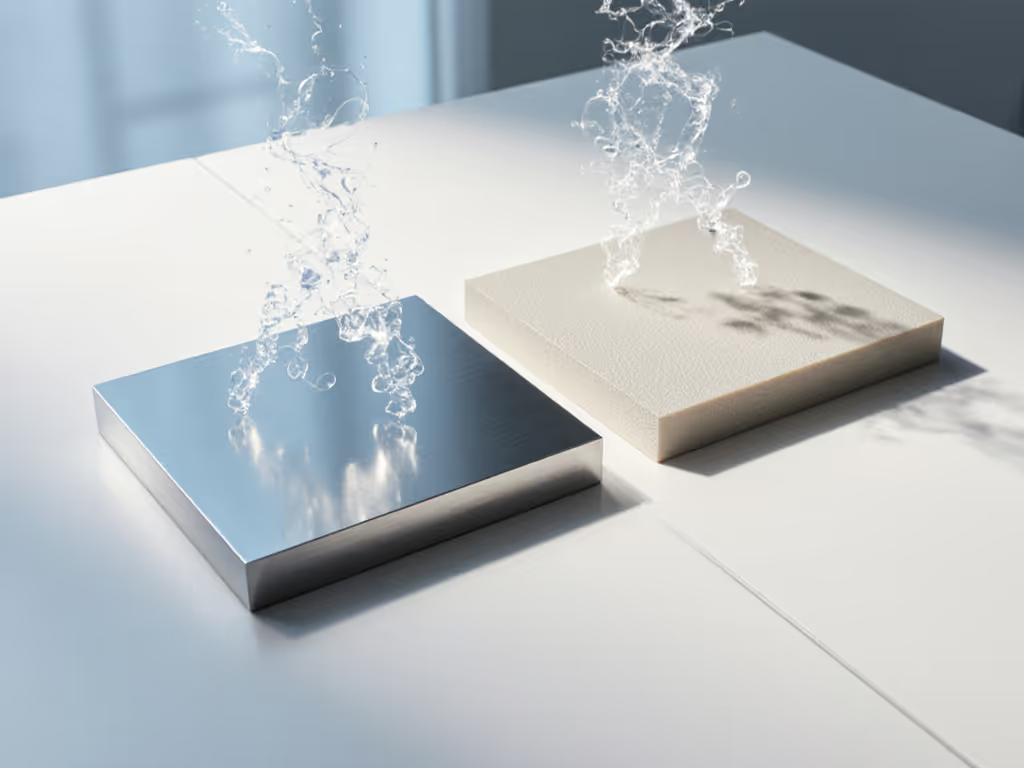
6. Noise & Vibration: Important in Thin-Wall Housing
For a lot of you, the box lives in a bathroom that shares a wall with someone else's bedroom. Material changes sound.
Plastic
- Softer and more dampening. Digging and scratching tend to sound more muted.
- Dropped litter hitting plastic has a duller, less metallic tone.
- Box movement across tile is often squeaky but lower-volume.
Stainless steel
- Acts more like a drum head if it's thin and unsupported.
- Digging, especially with clay or silica, can ring or ping, especially at night.
- If the pan doesn't sit flat (warped floors, uneven mats) it can rock and amplify noise.
If you have a cat who likes 3 a.m. excavation, plastic might be kinder to your neighbors and your own sleep hygiene.
Material notes:
- You can tame stainless noise by:
- Placing it on a dense rubber mat.
- Choosing thicker-gauge pans.
- Maintaining a consistent, adequate litter depth (litter acts as sound insulation).
7. Thermal Comfort: Cold Metal vs Neutral Plastic
Temperature is easy to overlook until your cat refuses the "upgrade."
Plastic
- Lower thermal conductivity; feels closer to room temperature.
- Less likely to feel cold to paw pads in winter.
Stainless steel
- Conducts heat well; in a cold bathroom, the bare pan can feel noticeably cooler.
- Most cats tolerate this if litter depth is adequate, but sensitive or arthritic cats might avoid icy-feeling surfaces at the edges where litter thins.
If your only viable location is a chilly entryway or unheated bathroom, plastic may be the safer default unless you can control floor temperature or use insulating mats.
Material notes:
- For stainless in cold spaces, use:
- A thick, insulating mat under the box.
- Adequate litter depth so paws seldom contact bare metal.
8. Weight, Handling, and Cleaning Logistics in Rentals
Think about where you actually wash the box: usually a small tub, a shower, or a tiny balcony. Real spaces matter here.
Plastic
- Light, easy to lift and tilt with one hand when empty.
- Easier to bang against tub edges without worrying about chips.
- But once large and filled with litter, flexing makes carrying more awkward; corners can twist.
Stainless steel
- Heavier per unit volume, but doesn't flex, so carrying a loaded box (if you ever need to) feels more predictable.
- Harder edges mean you need to be mindful of scratching tubs or tiles.
- In small showers, stainless can feel bulky, especially in "giant" formats sized for Maine Coon litter box durability.
Material notes:
- If you don't have hose access and must wash in a landlord's tub, consider:
- A lighter plastic box you can totally empty and carry without strain, or
- A stainless box sized to your tub footprint to minimize juggling.
9. Total Cost of Ownership: The Grams-Per-Day Math
Sticker price misleads. What matters is cost per year of acceptable performance.
Let's rough in a comparison for a two-cat home with one large breed:
- Mid-range plastic jumbo box: moderate upfront cost.
- Realistic lifespan under heavy use: 2-3 years before odor and cracks become unacceptable.
- Quality stainless box: 3-5x the price.
- Realistic lifespan: 8-10+ years with basic care.
If you spread cost over time:
- Plastic at 3-year replacement: ~3-4 boxes in a decade.
- Stainless at 10-year lifespan: 1 box.
Even ignoring eco factors, stainless often wins on annualized cost, if your cat accepts it and you're not forced to revert. To maximize that lifespan, follow our stainless care guide for scratch-safe cleaning and odor prevention.
On the time side:
- If stainless saves you even 30-60 seconds per scoop session because clumps slide instead of cement, that's 3-6 hours per year in a multi-cat home.
- For time-pressed professionals, that's not trivial; any routine that reduces "dread factor" tends to keep scooping compliance high.
Material notes:
- Don't buy two premium stainless boxes at once if you're unsure your cat will accept them. Transition one box first; keep a known-good plastic station active until you have consistent use.
Eco works only when the cat says yes.
That's why I track not just purchase price but acceptance rate. The most "sustainable" box in theory is wasteful if the cat stages a protest and your carpet pays.
10. Decision Guide: When Stainless Wins, When Plastic Makes More Sense
Stainless steel is usually the better fit if:
- You have large or high-peeing cats (Maine Coons, tall DSH, sprayers).
- Priority: rigid, tall walls, big footprint, and easy cleaning.
- Stainless provides better long-term Maine Coon litter box durability and less odor embedding.
- Odor control in a small apartment is a top concern.
- You scoop daily and use good litter, but old plastic still smells.
- Stainless gives you a neutral baseline so you're dealing with current waste, not pan history.
- You want fewer deep-clean sessions.
- With less clump cementing and less residual film, a quick wash is genuinely quick.
- That supports fast, predictable routines and lower mental friction.
- You plan for the long term and dislike frequent replacements.
- From a life-cycle framing perspective, one durable object is simpler than a series of "almost good enough" pans.
Plastic is usually the better fit if:
- You're noise-sensitive or share thin walls.
- A dig-happy cat in a stainless pan can sound like percussion practice.
- Your only wash zone is fragile or awkward.
- Delicate tub surfaces, strict landlords, or mobility constraints may favor lighter, softer plastic.
- You're in a cold space with no easy way to insulate.
- Plastic's neutral thermal feel removes one potential rejection trigger.
- You're risk-averse about transitions.
- Keeping a format identical to the current box (same shape/size, just fresher plastic) can be safer for cats who are already anxious about change.
Material notes:
- Mixed setups are legitimate: one stainless "workhorse" in a bathroom for primary use, plus one or two plastic boxes in quieter or warmer spots for backup and choice.
11. How to Test Material Changes Without Cat Drama
If you want to explore stainless without triggering box aversion:
- Add, don't replace, at first.
- Introduce the stainless box as an extra station near (but not crowding) the existing plastic box.
- Match substrate, depth, and placement.
- Keep litter type, fill level, and box location as similar as possible so the only major variable is material.
- Watch behavior, not just clump count.
- Does the cat dig confidently?
- Any hesitation jumping in?
- Any sudden renewed interest in other, less ideal spots (bath mats, corners)?
- Track hard data for 2-4 weeks.
- Very simple log: how many clumps per day in plastic vs stainless.
- Note any out-of-box incidents explicitly.
- Phase out old plastic only when stainless usage is stable.
- For multi-cat homes, wait until every cat has used the stainless box multiple times without stress.
This is where my bias shows: I care more about consistent, stress-free use than about any single "green" claim or visual aesthetic. If you’re planning a change in style or material, use our stress-free transition guide to avoid setbacks. Material choice is a tool to reach a clean, neutral-smelling, cat-approved routine, not an end in itself.
12. Where to Explore Next
If this large breed litter box material comparison has you leaning one way but not fully convinced, the next best steps are:
- Audit your current boxes.
- Check for cracks, corner cementing, and "ghost odor" even when clean.
- Measure your cats.
- Nose-to-base-of-tail length vs interior box dimensions.
- Time a full clean.
- From first scoop to done, for each box and material.
Use those numbers to guide your next experiment. Whether you stick with improved plastic, switch to stainless, or run a hybrid layout, you'll be making a decision grounded in your own data, your cats' behavior, and the realities of your space.
Material notes:
- The right litter box is the one your cat uses confidently, that you can clean quickly, and that your nose forgets about. Material is only "better" when it makes those three metrics easier to hit.
Related Articles