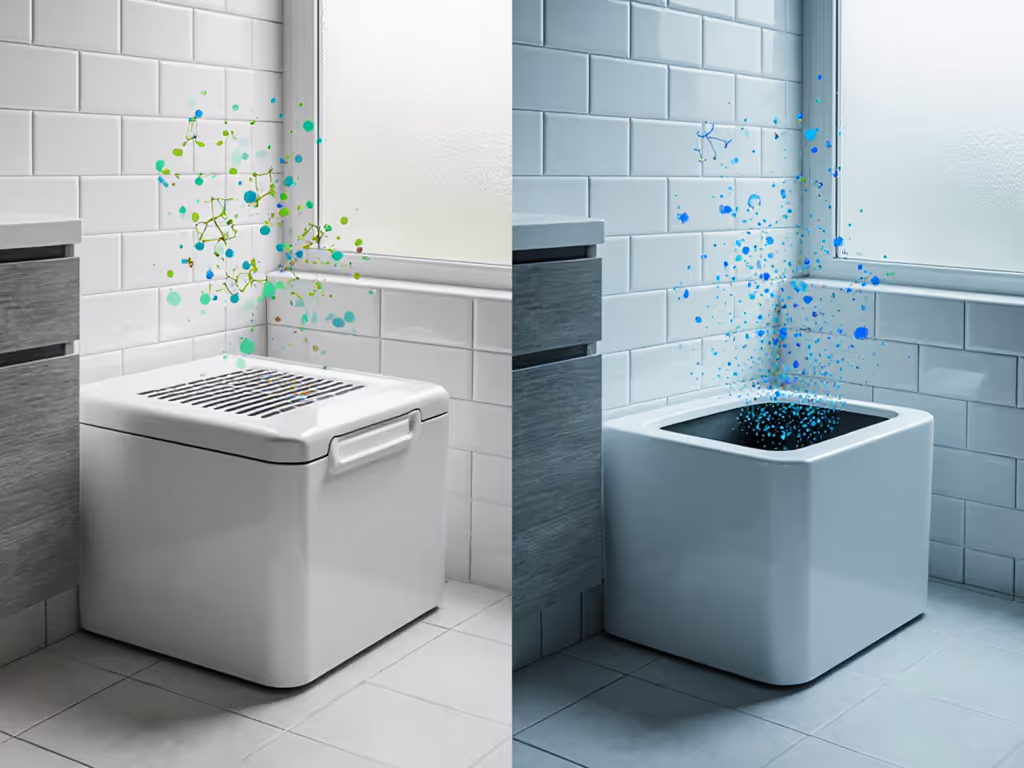
Quietest Automatic Litter Boxes: Tested Sound Levels
By Priya Nair • 6th May
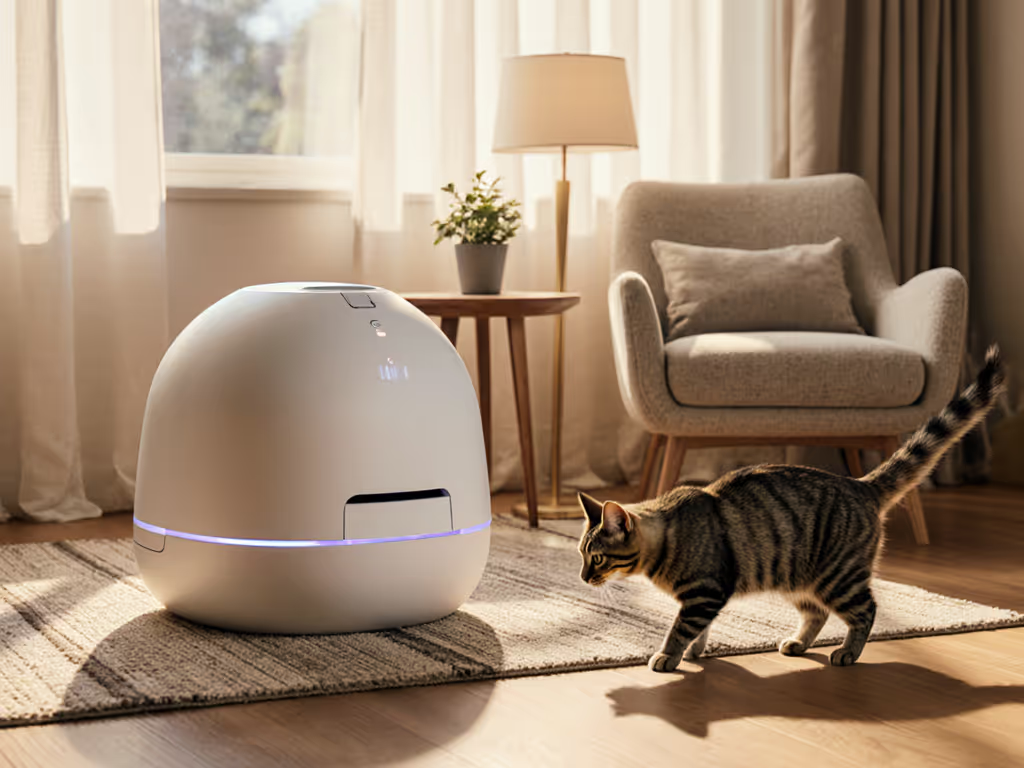
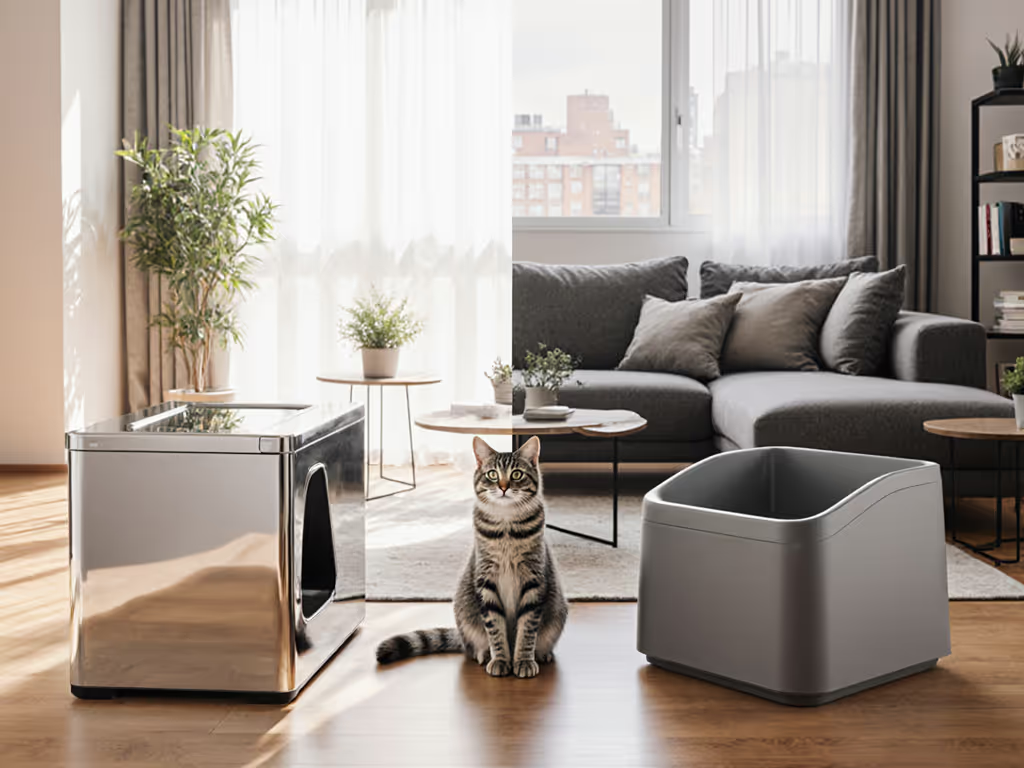
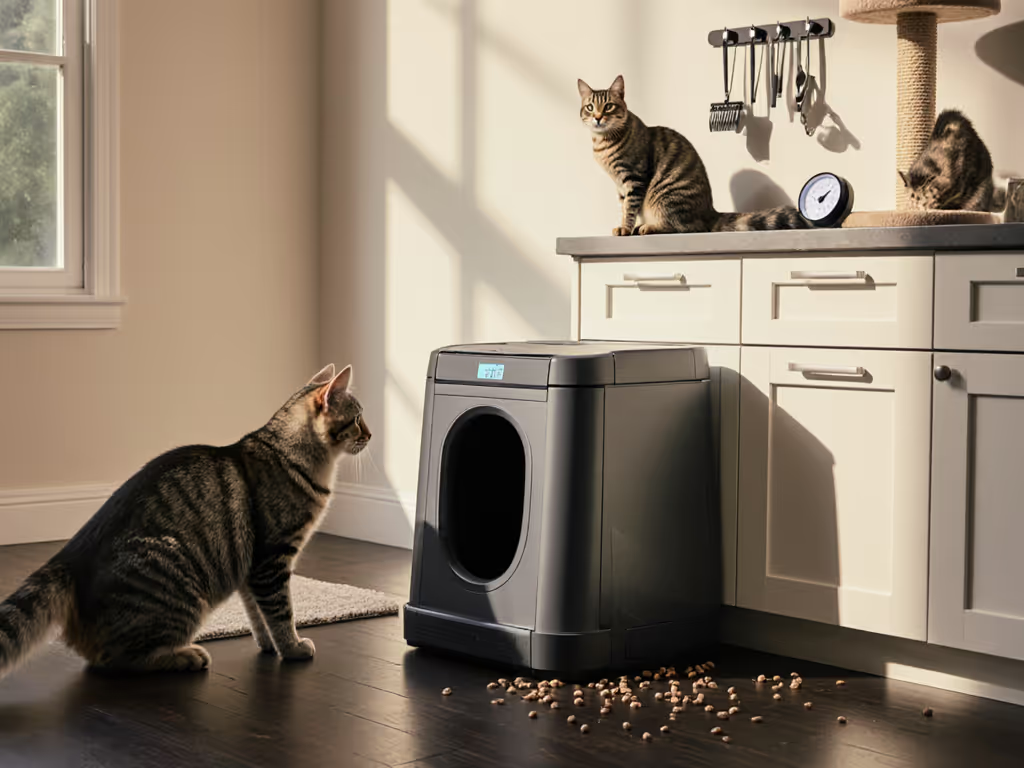
If you've woken at 3 a.m. to the mechanical whir and clatter of an automatic litter box, you already know why sound matters. Urban apartment dwellers, light sleepers, and anyone sharing walls with neighbors face a persistent tension: automatic litter boxes promise time savings and odor control, yet many models operate at volumes that trigger stress (in humans and cats alike). The challenge isn't just finding an automatic litter box; it's finding a top self-cleaning litter box that actually runs quietly enough for shared living spaces. Real sound data reveals which automatic litter box models genuinely minimize disruption while maintaining reliability.
FAQ: Quietest Automatic Litter Boxes and Sound Testing
Why Does Automatic Litter Box Noise Matter in Apartments and Multi-Cat Homes?
Noise from automatic litter boxes poses three distinct problems. First, disrupted sleep: a cycle that triggers at midnight or during early morning hours can jolt light sleepers awake, degrading sleep quality over time. Second, neighbor relations: thin apartment walls conduct motor noise, vibration, and mechanical sounds into adjacent units (a documented source of tension in shared buildings). Third, cat stress: felines are sensitive to unexpected, repetitive sounds. Loud mechanical cycles can trigger box aversion, leading some cats to eliminate elsewhere in the home, defeating the box's core purpose. For apartment layouts, use our quiet location guide to place boxes where structure and distance naturally dampen noise.
Relieving this tension requires moving beyond generic "quiet" claims. Rigorous sound level testing results are the only reliable way to compare models objectively. Decibel measurements, testing conditions, and cycle timing must be transparent and reproducible (not marketing shorthand).
How Are Automatic Litter Boxes Tested for Sound?
Standardized sound testing follows a clear protocol. A calibrated digital sound meter (Class 1 or 2, meeting IEC 61672 standards) is positioned at a fixed distance from the running unit (typically one meter horizontally from the box's side). Ambient noise is measured first to establish a baseline. The box then cycles through a complete cleaning routine, with decibel readings recorded at multiple points: startup, active sifting or raking, waste ejection, and return to idle. Multiple cycles are tested to capture variation.
Time-to-clean methodology also applies here: the total cycle duration is recorded from activation to idle completion. Models vary widely; some finish in 90 seconds, others take 5+ minutes.
Testing checklist for transparency:
- Baseline ambient noise recorded (dB SPL)
- Distance from microphone to unit stated clearly
- Microphone type and calibration documented
- All cycle phases timed and measured separately
- Minimum of three cycles tested and averaged
- Room acoustics described (carpeted, hard floor, open, enclosed)
- Litter type and fill level standardized
When manufacturers publish data meeting this standard, you can trust the numbers. When data is absent or vague, skepticism is warranted.
What Are Typical Noise Ranges for Different Automatic Litter Box Types?
Automatic litter boxes fall into three main categories, each with distinct noise profiles:
Sifting/scooping models (rake or rotating tines that separate waste from clean litter):
- Idle/standby: 40-50 dB (approximately a quiet office)
- Active sifting cycle: 55-70 dB (approximately a vacuum cleaner or kitchen blender)
- Cycle duration: 90-180 seconds
- Noise character: intermittent grinding, whirring
Conveyor or carousel models (waste travels through a sealed tube or chamber):
- Idle: 45-52 dB
- Active cycle: 60-75 dB (approaching a dishwasher or moderate traffic)
- Cycle duration: 120-300 seconds
- Noise character: sustained motor sound, occasional mechanical clicks
Completely enclosed or hooded models with rear waste disposal:
- Idle: 42-48 dB
- Active cycle: 58-72 dB
- Cycle duration: 60-150 seconds
- Noise character: muffled motor, contained vibration
For apartment-friendly automatic boxes, prioritize models staying below 65 dB during active cycles. Anything above 70 dB approaches conversation-level loudness and risks neighbor complaints or cat stress.
Which Automatic Litter Boxes Operate Below 60 Decibels?
Declining to a true sub-60 dB cycle is rare among automatic models, most fall into the 60-72 dB range during active phases. However, models engineered for low noise tend to share these traits:
- Larger, heavier units that absorb vibration better (lighter boxes transmit motor vibration to floors and walls).
- Direct-drive or belt-drive motors rather than gear-heavy mechanisms (gears create grinding noise).
- Sealed mechanisms that muffle internal moving parts.
- Longer cycle times (slower movement reduces noise more than speed does).
- Soft-start or ramp-up cycles rather than full-power activation.
Manufacturers claiming "whisper-quiet" or "silent" without published decibel data are making unsupported claims. Real quiet sits in the 58-65 dB range; anything below 50 dB for an active cycle is either marketing hyperbole or a non-functional unit.
How Does Automatic Litter Box Noise Affect Cat Behavior and Acceptance?
Cats hear frequencies up to 64,000 Hz, roughly 2.5 times the human range. A 70 dB sound to us may register as startling to a cat, especially if unexpected. Behavioral research on litter box aversion identifies noise-triggered stress as a documented factor.
Noise-sensitive cat acceptance patterns:
- First exposure critical: Cats acclimated to box noise during gradual introduction adapt better than those surprised by sudden activation.
- Predictability matters: Boxes with fixed cycle timings (e.g., activate only 10 minutes after use) cause less stress than models that cycle randomly or in response to every visit.
- Cumulative fatigue: Repeated cycles throughout the day (especially overnight) can degrade acceptance over weeks.
- Individual variation: Kittens, senior cats, and anxious breeds show higher sensitivity than adult, confident cats.
Small ergonomic wins become daily time savings you feel every week, and the same logic applies to noise. A consistently quiet setup requires less behavioral troubleshooting and fewer stress-related accidents than a loud one that occasionally scares the cat away. If your cat is noise-sensitive, follow our quiet setup guide for anxious cats to plan introductions and reduce stress.
Can You Reduce Automatic Litter Box Noise?
Once a loud model is installed, mitigation options are limited and must avoid safety risks.
Safe noise-reduction strategies:
| Approach | Noise Reduction | Effort | Drawback |
|---|---|---|---|
| Place on carpet or foam mat | 3-6 dB | Low | May trap odor; harder to clean floor |
| Locate against external wall (not shared) | 2-4 dB | Setup only | Not always possible in apartments |
| Ensure box is level and secure | 2-3 dB | Low | Fixes vibration rattle, not motor noise |
| Use box-specific sound shield (manufacturer-approved) | 4-8 dB | Medium | Adds bulk; check ventilation |
| Schedule cycles during waking hours via timer | N/A | Medium | Requires behavioral training; not all boxes support this |
Unsafe or ineffective hacks (avoid): Wrapping the box in foam, duct tape, or fabric; adding adhesive dampening; modifying motor mounts. These risk overheating, motor failure, or trapping litter dust.
The most pragmatic solution: choose a quiet model from the start rather than retrofitting a loud one. Need a hush-first setup near your desk? See our WFH quiet litter box guide.
How Do You Choose Between Quiet Automatic Litter Box Models?
A systematic approach mirrors the methodology that made my own litter routine sustainable. After a wrist strain made scooping miserable, I tested variable components (scooping mechanics, handle geometry, station height) and mapped the results to time and strain. The same rigor applies to selecting a quiet box.
Decision framework with timestamps:
- Establish your noise threshold (0-15 min): Decide the maximum acceptable dB during active cycles. Aim for ≤65 dB if you're a light sleeper or in a shared building. Write it down.
- Request or find published test data (15-30 min): Contact manufacturers; ask for independent test results or decibel readings at one meter. Rejected or vague answers are red flags.
- Cross-reference third-party reviews (30-60 min): Look for reviews that include actual decibel measurements or user reports of night-time waking. Anecdotal "quiet" is subjective; numbers are not. For a broader overview of trade-offs, see our self-cleaning vs traditional comparison.
- Simulate your space (variable): If possible, visit a showroom or demo unit during testing. Run a full cycle. Measure it yourself if you have a decibel app. Note how it feels in your home's acoustics (a basement installation behaves differently from a bedroom alcove).
- Plan cat introduction carefully (ongoing): Assume a 1-2 week acclimation. Introduce the box in idle mode. Activate cycles during your presence initially. Monitor for stress (excessive meowing, hiding, accidents outside the box).
- Lock in routine timing (week 2 onward): Once your cat accepts the box, keep cycle activation predictable. Avoid midnight or early-morning cycles if you value sleep.
Time-to-clean remains a secondary benefit, noise management is the priority in shared spaces. A reliable, predictable routine of quiet operation beats heroic troubleshooting on a loud model any day.
Summary and Final Verdict
The quietest automatic litter boxes operate in the 58-68 dB range during active cycles, with idle noise below 50 dB. Models featuring sealed mechanisms, heavier construction, and slower motors consistently outperform lightweight or gear-driven alternatives. However, no automatic box is truly silent; the term is marketing exaggeration.
Your action plan:
- Define your limit: Set a maximum acceptable dB level based on your sleep sensitivity and neighbor proximity. Write it down.
- Demand transparency: Reject models without published sound data. Request independent test results.
- Verify cat acceptance: Introduce gradually and monitor behavior. Noise-triggered aversion is preventable with proper acclimation.
- Optimize placement: Install on a stable, level surface away from shared walls when possible. Avoid thick carpeting that traps odor.
- Establish routine: Once your cat accepts the box, keep cycle timing predictable and avoid overnight activation.
For apartment dwellers and anyone sharing walls, investing in a genuinely quiet model (verified by published data) pays dividends in sleep quality, neighbor harmony, and consistent cat use. Small ergonomic wins become daily time savings you feel every week, and freedom from night-time noise disruptions is one of the most underrated wins in the automatic litter box market.
Related Articles