How Feline Scent Preferences Affect Litter Box Use
By Omar Haddad • 6th May
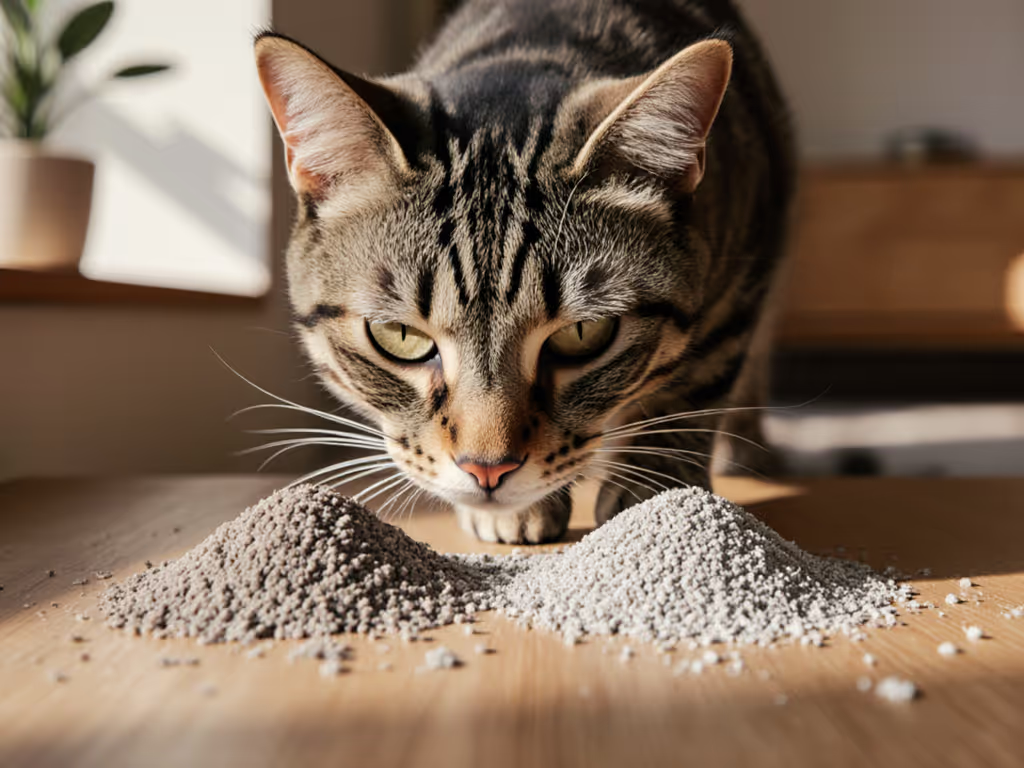
The marketing promise is intoxicating: lavender-infused litter, tropical breeze fragrance, or spring meadow scent. The pitch? Your home will smell fresh, your cat will be happier, and guests will notice the difference. What the packaging rarely mentions is that feline scent preferences around litter box choices operate on entirely different biology than human noses do, and that most fragrance additions are engineered for humans, not cats. This is where theory meets grams-per-day math and acceptance rates collide with marketing narrative.
I learned this the hard way years ago. I invested in a premium eco-certified litter loaded with botanical aromatics (supposed to be "naturally" scented, sustainable, and cat-approved). My cat staged an elegant protest: deliberate misses just outside the box, and the carpet took the casualties. I watched $80 worth of litter sit mostly unused while I scrambled through cost-per-scoop calculations and life-cycle framing to figure out what went wrong. Spoiler: the fragrance was the culprit. Once I switched to an unscented mineral blend with a proven sifting setup, waste plummeted and box use stabilized. That's when I truly understood the principle: Eco works only when the cat says yes.
Understanding Feline Scent Biology
Cats possess roughly 200 million scent receptors in their nasal epithelium, compared to the human baseline of 5 million. This isn't just a quantitative difference; it's a fundamentally different sensory reality. A cat doesn't experience fragrance as a subtle background note; it arrives as a dense, multi-layered chemical signal that dominates their olfactory landscape.
What matters more is how cats use scent to communicate identity, territory, and emotional state. Research published in peer-reviewed behavior studies shows that cats form strong associations between their owner's personal scent profile and safety. They also rely heavily on pheromone production (chemical markers released from glands along the forehead, chin, cheeks, and paw pads) to create a sense of ownership and calm within their environment. When you introduce a foreign fragrance into their litter box, you're not enhancing comfort; you're potentially masking or competing with their own scent signature. For a deeper look at how instinct and environment shape box acceptance, see our feline psychology guide.
Individual personality also shapes scent response. Studies measuring behavioral responses to human odor noted strong associations between sniffing patterns and feline neuroticism and agreeableness traits, particularly in males. Anxious or highly sensitive cats are far more likely to reject a litter box that smells "wrong" to them, and "wrong" often means anything that deviates from the mineral or clay baseline they've learned to associate with their waste.
Scented vs. Unscented: A Comparative Analysis
Scented Litter: The Marketing Case
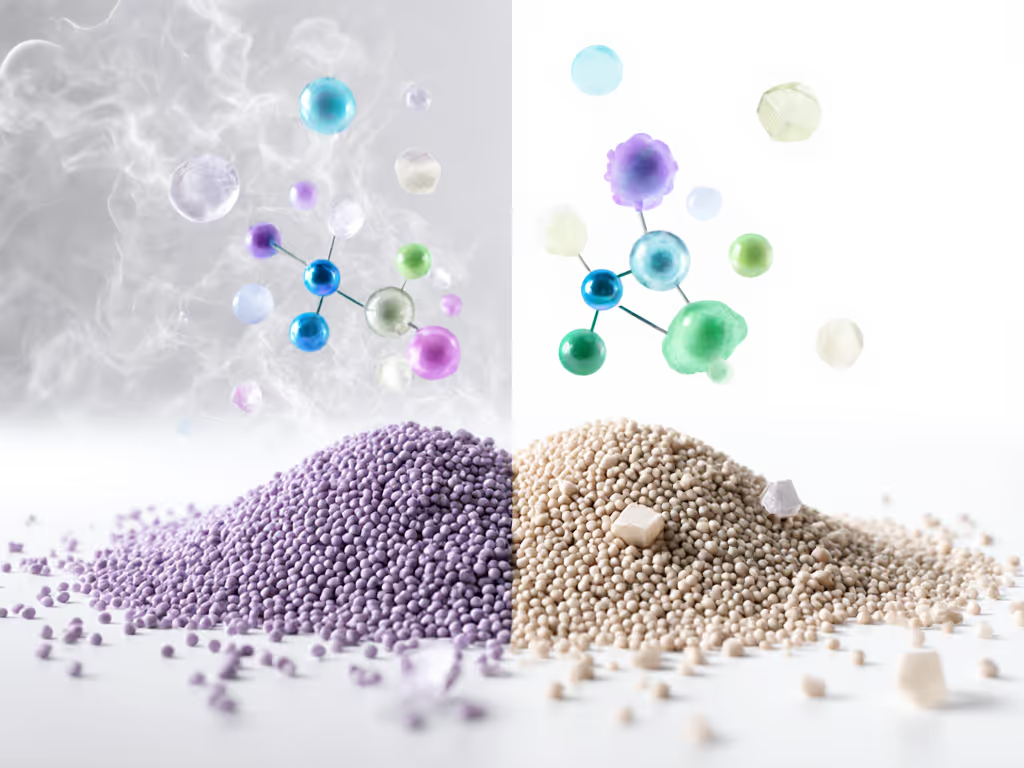
Fragranced litters dominate pet-store shelf space because they work brilliantly for the end-user profile that matters most to retailers: the human who opens the bag, wrinkles their nose at the ammonia cloud, and buys the product on the spot. Fragrance masks odor (temporarily). For roughly 12-24 hours post-scoop, a litter infused with essential oils or synthetic fragrances will smell pleasant to human olfaction. Then, as bacterial breakdown accelerates, the fragrance fades and the chemical + ammonia signature re-emerges.
The catch: this cycle creates a false sense of maintenance. Instead, build a maintenance routine with our odor control cleaning guide. A human might believe their litter box smells managed when, in reality, odor control hasn't improved; it's been chemically postponed. From a grams-per-day math perspective, fragrance adds weight to the litter without improving clump integrity or moisture absorption, which are the actual drivers of odor longevity.
Unscented Litter: The Behavioral Baseline
Unscented litters (typically mineral-based clumping formulas with kaolin clay and bentonite) offer two critical advantages. First, they don't introduce competing chemical signals that might trigger box aversion in sensitive cats. Second, they allow feline olfactory behavior to function normally; cats can detect the subtle pheromone markers they and their companions have deposited, reinforcing territorial comfort and box loyalty.
Life-cycle framing reveals a hidden benefit: unscented litters generally require less frequent full-pan cleanouts because odor isn't masked; it's actually contained longer by proper clump formation. A tight, moisture-sealed clump traps ammonia release more effectively than fragrance can cover it, extending the usable life of litter between full changes.
Material notes: Cats show measurably higher acceptance rates for unscented substrates, with behavioral studies and anecdotal household reports consistently favoring mineral clumping formulas without additives.
The Hidden Costs of Fragrance
When you price fragrance into litter on a per-scoop basis, the math gets uncomfortable. A 20-pound bag of scented litter costs, on average, 15-25% more than its unscented equivalent. If your household runs through grams-per-day math at 150-250 grams per cat per day, that premium compounds rapidly. Over a year with two cats, fragrance markup alone can exceed $200. Yet that premium produces zero improvement in clump performance, dust suppression, or odor containment, only a delay of odor perception in human noses.
Worse: if fragrance triggers even mild box aversion, the cost calculation becomes catastrophic. A cat that begins eliminating outside the box due to texture, scent sensitivity, or simple preference drift now creates downstream costs (enzymatic cleaners, potential veterinary behavioral consults, carpet replacement, or guardian stress). The "bargain" $25 fragrant litter becomes a $500+ failure.
Dust and Respiratory Impact
Many fragrance formulations are applied via spray or coating onto the litter particles, which can increase dust generation during scooping and pouring. Dust isn't merely an inconvenience; for cats with asthma, allergies, or respiratory sensitivity, and for guardians with similar conditions, fragrance-laden dust becomes a household health factor. If dust is a concern, compare options in our low-dust litter comparison. Unscented formulas often (though not always) contain fewer additives and tend toward lower dust profiles.
Multi-Cat Scent Dynamics
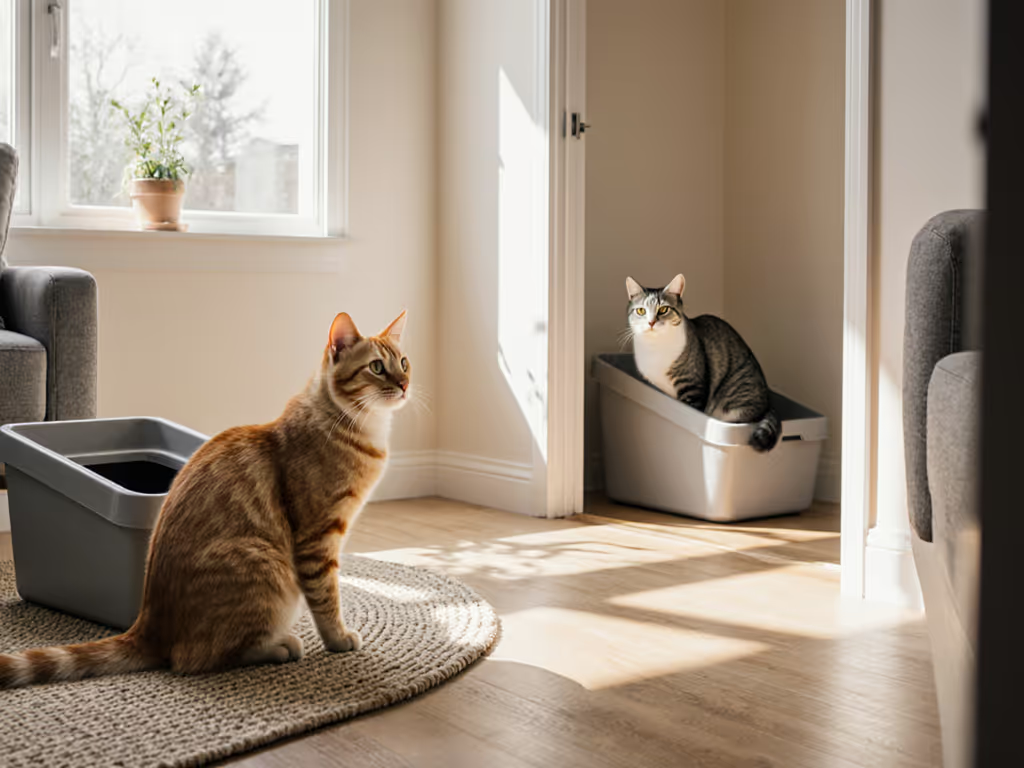
In households with multiple cats, scent preference complexity multiplies. Cats don't perceive litter boxes as neutral spaces; they're territorial markers. When you introduce a heavily fragranced substrate, some cats may avoid it, creating box-guarding behavior or resource concentration in non-scented alternatives. This can trigger inappropriate elimination, stress-related spraying, or litter-box ambush dynamics. Reduce tension by following the multi-cat litter box formula.
Unscented litters allow each cat's individual pheromone signature to remain detectable, which paradoxically reduces conflict by preserving natural olfactory communication between housemates. Clear caveats before claims: this isn't guaranteed to eliminate multi-cat tension, but it removes a preventable variable.
Material Notes: A Practical Framework
If you're comparing litter options through a scent-preference lens, use this framework:
- Acceptance first. Introduce any new litter (scented or otherwise) gradually (10-15% replacement daily) over 10-14 days. Monitor box use carefully. If adoption falters, stop.
- Life-cycle cost math. Calculate cost per gram of litter, not per bag. Compare that to clump integrity, dust output, and true odor containment (not fragrance masking). Over 12 months, the real cost-per-scoop winner often surprises.
- Test unscented first. If your cat is a happy litter-user, resist fragrance additions. You're solving a human problem, not a feline problem.
- Watch for dust. Count sneezes and respiratory signs. Fragrance additives can correlate with higher dust; measure your baseline and any change.
- Reserve fragrance for your space. If odor control is genuinely weak, address substrate quality and scooping frequency first. If that fails, consider litter cabinet design, activated-carbon filters, or enzymatic waste management (interventions that do not alter the cat's box experience).
The Verdict
Fragrance in cat litter is a solution to a human problem dressed up as feline convenience. The science of feline scent sensitivity, the behavioral data on box aversion, and the life-cycle math all point in the same direction: cats don't ask for fragrance, don't need it, and often reject it. The premium cost and dust risks further erode the case.
This isn't moralizing: it's practical tradeoff analysis. Your cat's litter box hygiene depends on clump quality, moisture control, and consistent acceptance. Fragrance delivers none of those. Unscented mineral formulas, paired with diligent scooping and proper box placement, solve the actual problem: a clean home and a cooperative cat.
Continue Exploring
If this framework resonates with your situation, consider investigating these related questions: What role does litter-box size and entry style play in acceptance? How does your home's humidity affect clump performance across scented vs. unscented substrates? Are there specific dust-minimizing unscented options that fit your budget and your cat's behavioral profile? The answers will be unique to your household's grams-per-day math and life-cycle footprint, and worth testing with clear metrics before you commit to a full bag.
Related Articles