When Cats Share Litter Boxes: Social Dynamics Science
By Maya Santos • 24th Apr
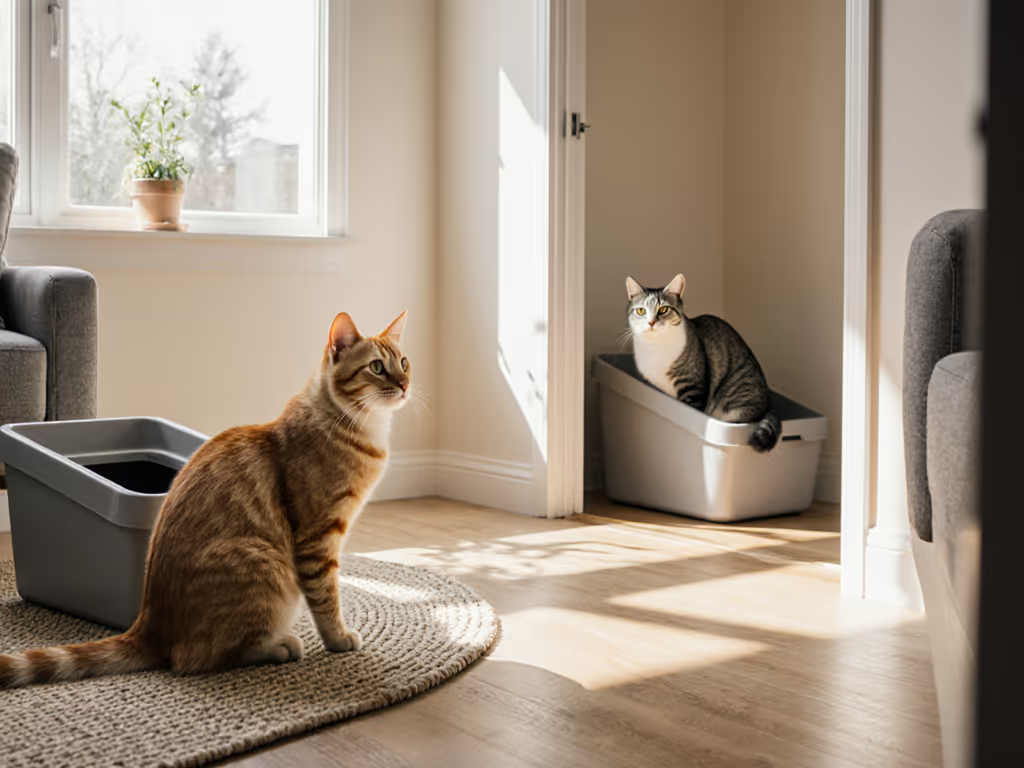
When a cat's litter box time turns into a minefield of territorial tension, or when a covered litter box becomes a trap during multi-cat bathroom visits, the root issue isn't the hardware, it's behavior fit. Most households with multiple cats assume one or two large boxes will suffice. They don't. The moment a second or third cat enters the picture, litter box dynamics shift from simple waste management to a complex social hierarchy, and if you get the setup wrong, you'll see inappropriate elimination, stress spraying, and a home that never quite settles.
The Problem: Why Shared Boxes Create Conflict
When multiple cats share limited litter resources, cat social dynamics determine success or failure far more than box size or style. Cats are not naturally social animals in the way dogs are; they tolerate each other, but they don't naturally cooperate for bathroom use. Each cat has an innate sense of territory, and the litter box (a confined space where a cat is vulnerable) sits at the heart of that territory[1].
Shared boxes create a bottleneck. A subordinate cat waits for the dominant animal to finish, and over time, that subordinate delays toileting, holds waste, or seeks an alternative spot (usually your carpet or bed). This isn't stubbornness. It's stress physiology: cats in conflict suppress their elimination schedules as a protective behavior.
The Agitate: What Happens When Social Dynamics Break Down
Imagine a household with two cats. The first is confident and fast. The second is timid and cautious. If they share one or two boxes, the timid cat quickly learns that bathroom visits coincide with potential confrontation. She may hover near the box, waiting for the confident cat to leave. She may start spraying or eliminating outside the box in low-traffic areas (a behavior driven by anxiety, not rebellion).
Now add a third cat, or place that box in a dead-end room with only one entrance. The worst outcome: one cat ambushes another mid-elimination, a violation of the most vulnerable moment a cat experiences. That cat may refuse the box entirely, even in a different location, because her stress memory is now attached to the act of using any box, not just that specific one. If this has already happened, follow our litter box avoidance solutions to retrain without adding stress.
The household notices odor complaints, accidents on tiles or bedding, or suddenly one cat won't leave a room. The reflexive response is to buy a fancier box, add a cover, or install an automatic device. But none of these address the real driver: insufficient, poorly placed resources and unresolved territorial tension.
The Science: How Cats Navigate Resource Distribution
Recent behavioral research confirms what shelters and multi-cat households have learned through trial: the guideline "one box per cat plus one" is a behavioral baseline[1], not optional guidance. For a clear rule-of-thumb, see the multi-cat litter box formula and why it reduces conflict. Cats have finite tolerance for box-sharing, and that tolerance varies by individual temperament, early socialization, and genetic predisposition.
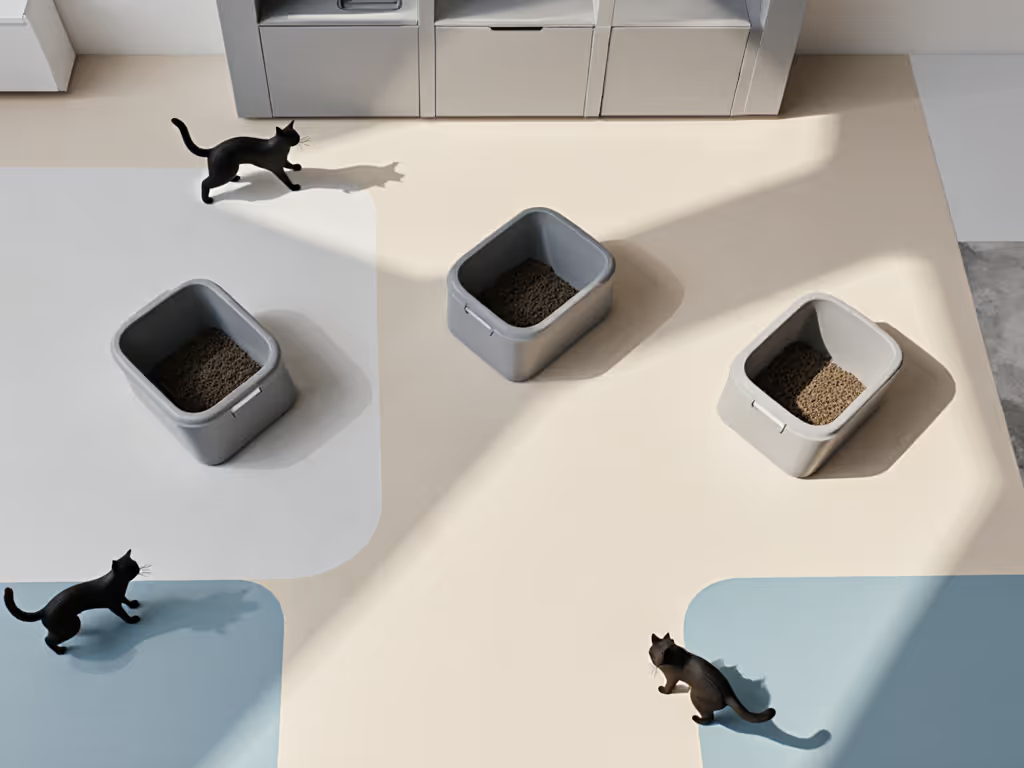
Litter box territory management operates on a simple principle: cats need a refuge where they feel safe from ambush and competition. When boxes are clustered in a single room, they function as one resource, not multiple. A dominant cat can effectively control all of them by camping near the entrance. Separation (placing boxes in different zones of the home) allows subordinate cats autonomous access[1].
Additionally, feline stress indicators linked to poor box placement include:
- Avoidance of the box or hesitation before entering
- Prolonged time spent in or near the box without elimination
- Spraying on vertical surfaces near the litter area
- Over-grooming or reduced grooming
- Hiding or withdrawn behavior in the hours following box use
- Elimination outside the box in quiet, remote corners
These are not medical issues; they are behavioral warnings that your setup has exceeded your cats' tolerance for resource competition.
The Solve: Evidence-Based Placement and Configuration
Understand Your Cats' Social Hierarchy
Before you place a single box, observe your cats over several days. Note:
- Who eats first and who waits
- Who occupies preferred resting spots, and who relocates
- Who initiates play or conflict, and who withdraws
This isn't about labeling one cat as "dominant." It's about understanding which animals feel secure in shared spaces and which are conflict-averse. The conflict-averse ones will need guaranteed privacy and separate box placement.
Apply the "Number Plus One" Rule (And Actually Spread Them Out)
For every cat, provide one box, plus an extra. For two cats, deploy three boxes minimum. For three cats, deploy four[1]. Crucially, shared box placement strategies demand geographic separation. Place boxes in different rooms or different zones within a large room, with obstacles or visual breaks between them.
Why? A cat in a box is immobilized. If another cat can see her or block the exit, stress spikes immediately. Separation ensures that even a nervous cat can slip into a box without risk of entrapment or ambush.
Eliminate Dead-End Placements
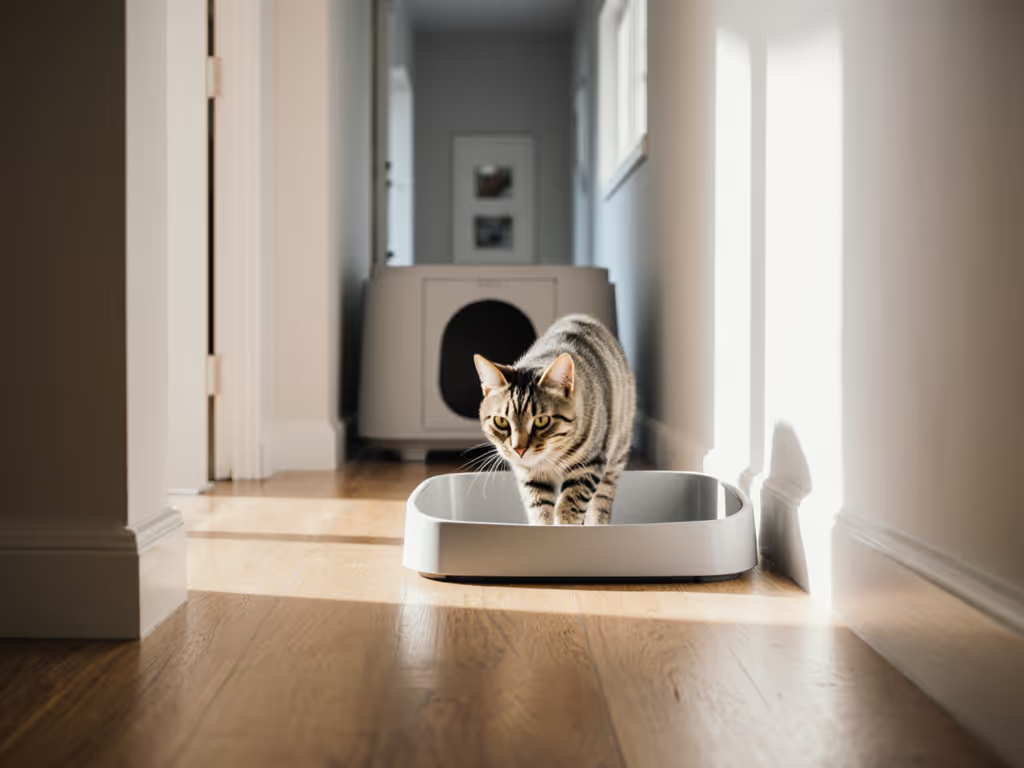
Never place all boxes in a single room with one exit, and avoid narrow closets where a cat feels cornered[3]. For layout-specific advice, learn the science of litter box placement across different home designs. If you must use a closet, ensure two entry points (perhaps a cat door and a slightly open main door) so a cat always has an escape route. Cats need quiet, private, and accessible spots to do their business comfortably, and exit routes are part of accessibility[1][3].
Match Box Style to Individual Preference, Not Aesthetic Preference
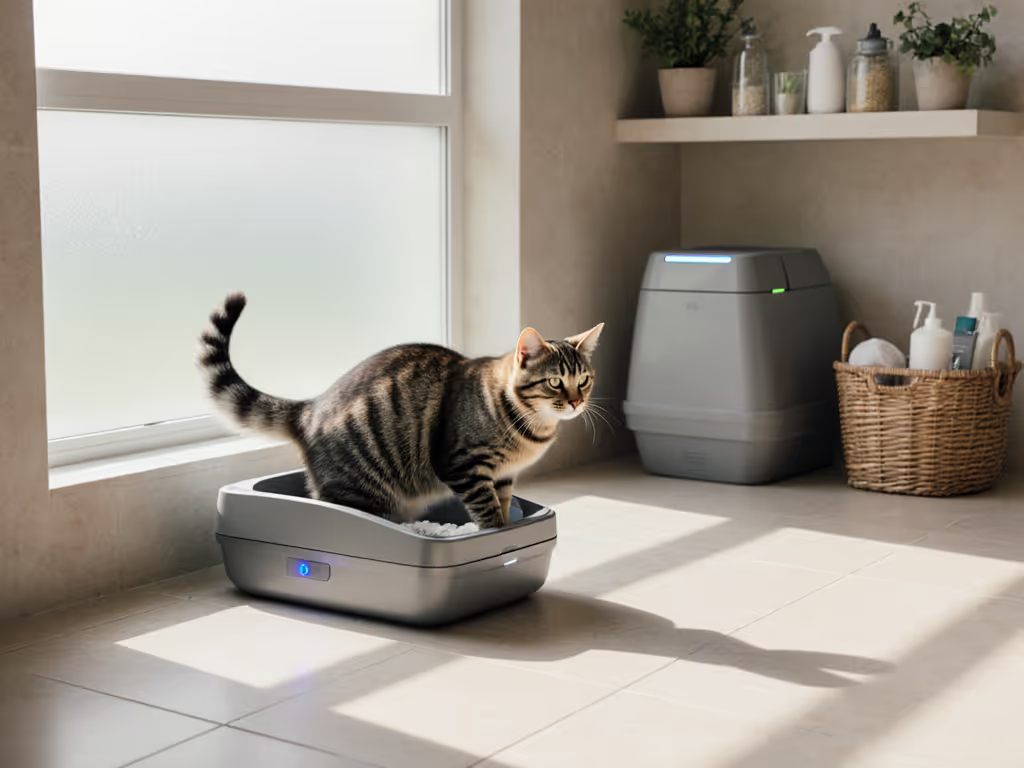
Open boxes are typically preferred by anxious cats; they offer visibility and multiple escape routes. Covered boxes appeal to some cats but terrify others, especially subordinate animals who fear being trapped. To understand the instincts behind these preferences, read our feline litter box psychology guide. Test both styles if you have the space. If one cat consistently avoids a covered box, remove the cover or place an open box alongside it.
In one multi-cat rotation, a timid returnee rejected every attractive enclosure but thrived in an under-bed storage bin with soft, unscented litter. The low-walled, open design gave her sight lines, and the soft substrate felt secure. Over a week, we gently raised the bin's edges (a tiny environmental tweak) while keeping scent cues (her preferred litter unchanged) stable. She accepted the gradual change because the behavior fit was correct from day one.
Choose Litter Substrate Carefully
Cats have substrate preferences formed early in life. For substrate science and paw comfort, see cat litter texture preferences. An anxious cat often prefers soft, unscented clumping litter that feels natural underfoot. Offer a consistent substrate across all boxes to avoid decision paralysis. Cats vote with paws, not product pages or promises.
Address Placement in Small Homes
Urban apartments and condos demand creativity[1]. One high-traffic bathroom shared by a household doesn't work if you need three separate litter stations. Consider:
- A laundry room (if you have one) for a second station
- A spare closet with a cat door for a third
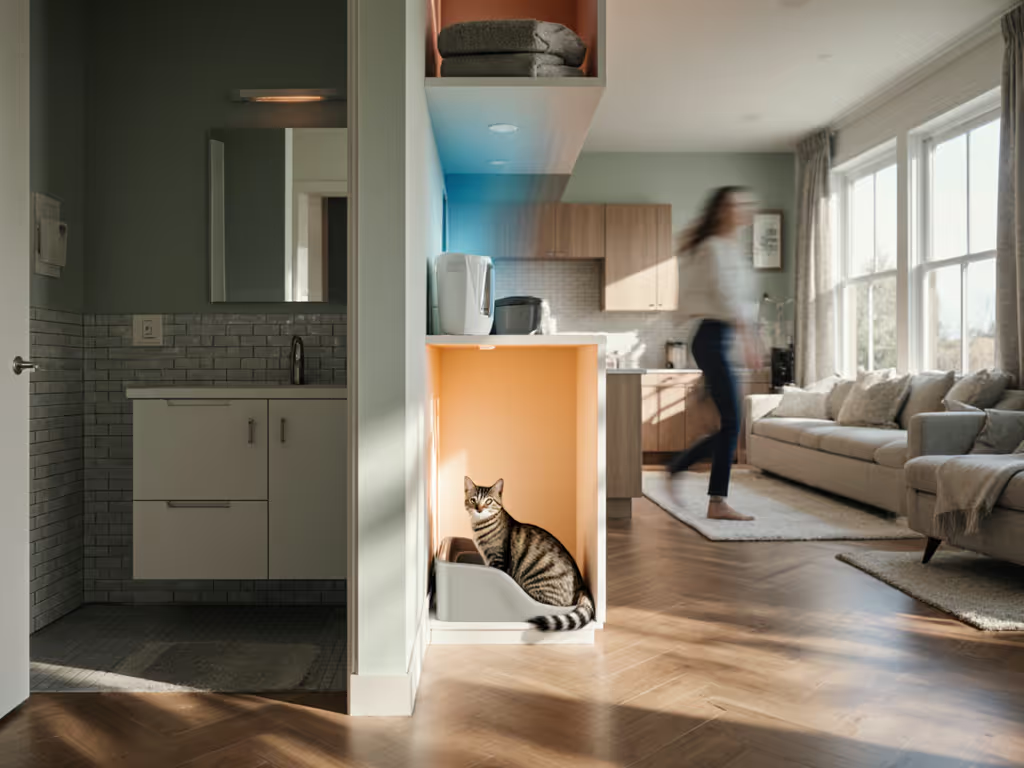
- A hallway alcove or corner with a visual barrier (a simple curtain or plant stand) to create a semi-private nook
- An under-bed storage bin or low-profile box in a rarely-used guest room
The principle is consistent: each box exists in a zone where one cat can reach it without crossing another cat's preferred territory.
Monitor Stress Indicators Over Time
After you've deployed your multi-box setup, track behavior over 7 to 10 days. Are all cats using all boxes, or are they clustering around one? Is the anxious cat now eliminating outside the box less frequently? Is spraying behavior declining? If yes, your setup is working. If stress indicators persist, move boxes further apart or add a fourth station.
The Next Step: Build Your Baseline
Before investing in covers, furniture, or filters, confirm that box placement and number are solving the social conflict. Once baseline acceptance is stable, you can optimize for odor, dust, or aesthetics. But skipping this step (rushing to gadgets while social dynamics remain fractured) guarantees failure.
For your multi-cat home: identify your cats' social hierarchy this week, count your current boxes, and map out a three-box (or more) placement plan using the zone-separation principle. Place one box in a different room or well-separated zone each day over 3 to 5 days, monitoring for acceptance and stress signs. This stepwise introduction prevents rejection and gives each cat time to discover her own route and safe spot.
Behavior-fit comes first. Everything else follows.
Related Articles